dbt: Your SQL, Promoted to Software
Why analysts and engineers stopped writing throwaway SQL scripts and started building data transformations the way we build code — with version control, tests, and a dependency graph.
Turn SQL into a real software project — models, tests, and a DAG — with dbt, verified end to end on DuckDB.
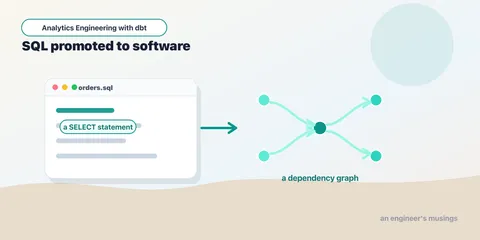
Why analysts and engineers stopped writing throwaway SQL scripts and started building data transformations the way we build code — with version control, tests, and a dependency graph.
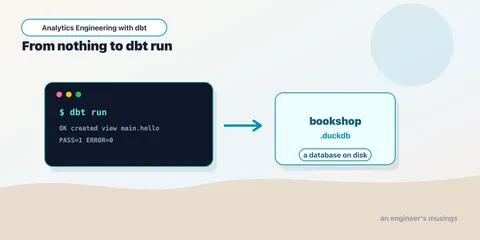
Install dbt Core, point it at DuckDB, and build your first model — the whole loop, with every command and its real output.
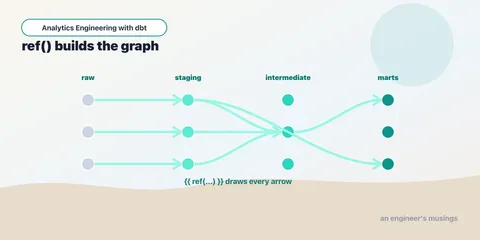
One function turns a folder of loose queries into a dependency graph dbt can order, parallelize, and reason about. Meet the DAG, and the staging-to-marts layering everyone uses.
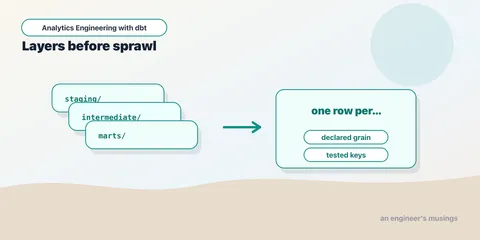
How to organize staging, intermediate, and mart models so the project stays readable after the first dozen files.
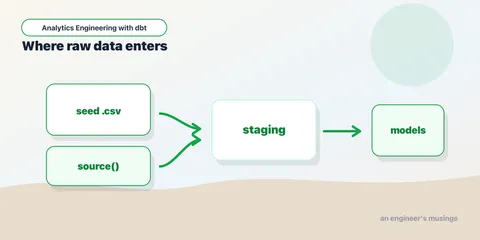
Two ways raw data enters a dbt project — sources that name tables someone else loaded, and seeds that load small CSVs you control — plus freshness checks on the stuff you don't.
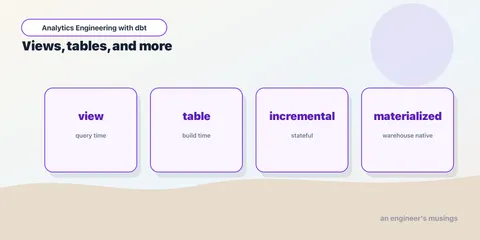
The same SELECT can become a view, a table, or an inlined CTE. Choosing the materialization is choosing your trade between build cost and query cost — here's how to pick.
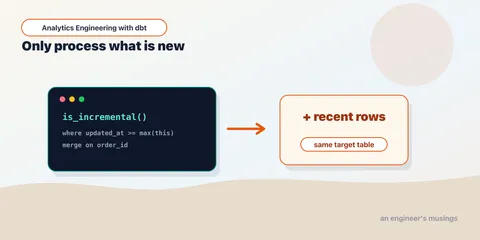
When a table gets too big to recompute from scratch every run, incremental models process only the new rows. The materialization, the is_incremental() guard, and the escape hatch when logic changes.
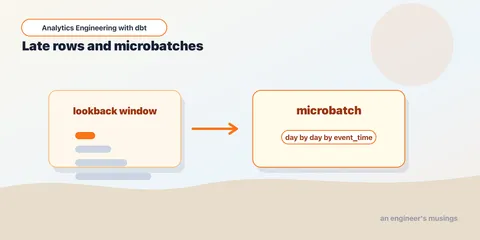
Late-arriving data, composite keys, microbatching, adapter strategies, and the edge cases that decide whether an incremental model stays trustworthy.
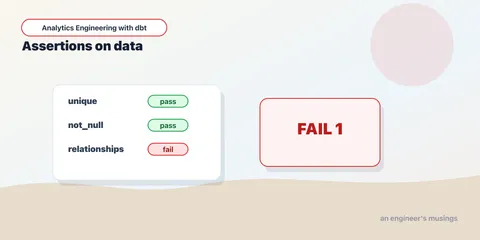
dbt's data tests turn a line of YAML into a query that fails the build when your data is wrong — unique keys, non-null columns, referential integrity — plus the config knobs that decide how loudly each one fails.
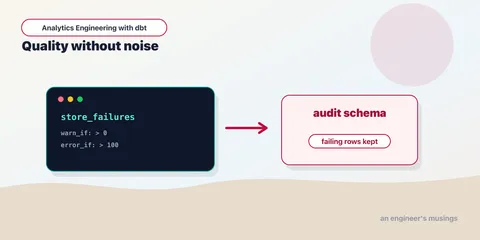
How to use thresholds, failure storage, packages, custom generic tests, and project health checks without turning tests into noise.
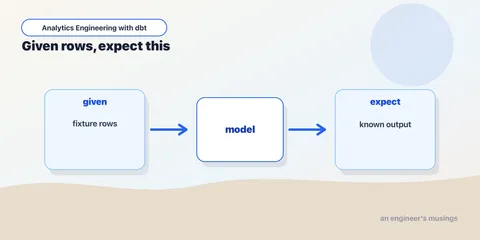
Data tests check the rows flowing through your models. Unit tests check the logic itself — feed a model fixed inputs, assert the exact output, and catch a broken CASE statement before it ever touches real data.
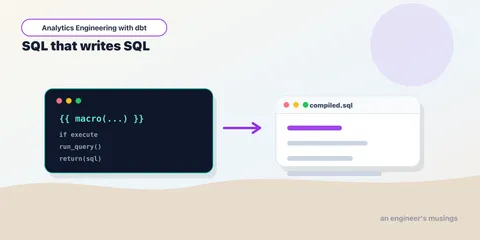
The templating layer under every dbt model. Jinja expressions, control flow, macros you write once and reuse, and the dbt_utils package that has already written the ones you need.
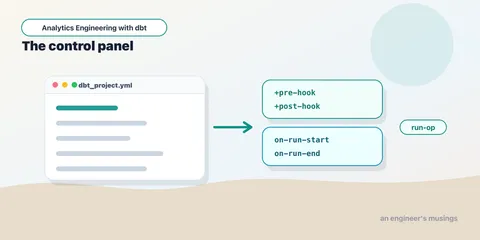
dbt_project.yml key by key, the + config cascade and its merge rules, hooks that fire around every build, and run-operation — the macros that do things instead of returning SQL.
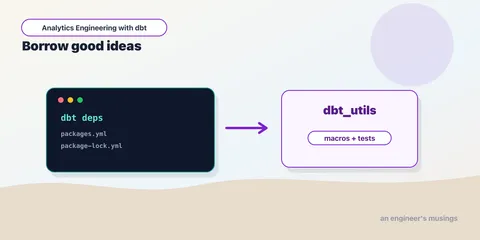
How package installation, locking, dispatch, private dependencies, and the dbt package ecosystem fit into a production project.
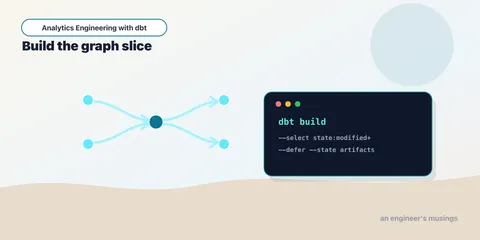
Selectors, graph operators, indirect test selection, artifacts, and the mechanics behind the one command you eventually run everywhere.
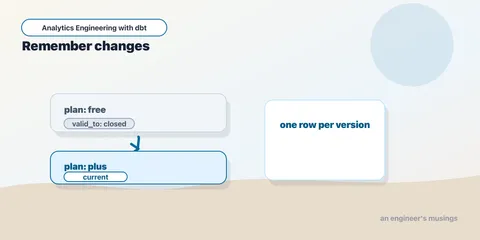
Source systems overwrite the past — a customer's plan flips from free to plus and yesterday's value is gone. Snapshots capture each change as history, giving you slowly changing dimensions with almost no code.
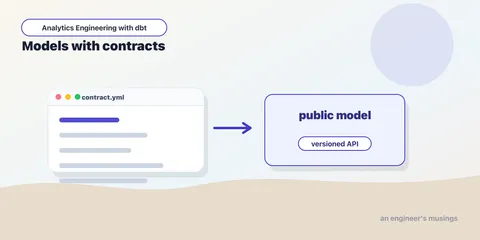
Model contracts, constraints, versions, access levels, groups, and the governance features that keep a popular model from becoming a liability.
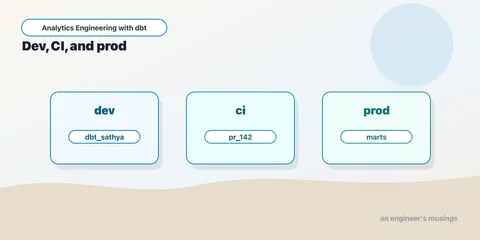
Profiles, targets, custom schemas, environment variables, secrets, and the dev/prod split that keeps analytics work from colliding.
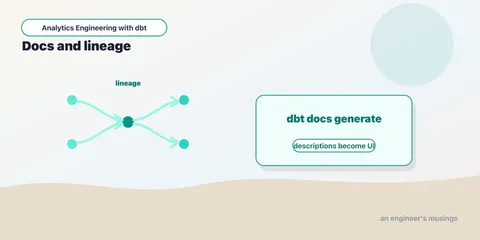
The last mile: turn your project into living documentation with a real lineage graph, then run it in production — environments, CI, and building only what changed.
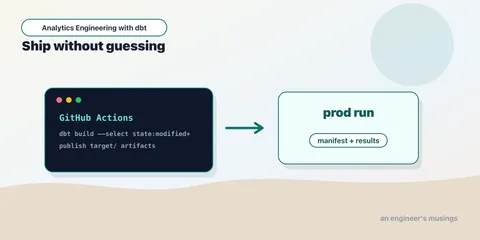
Slim CI, state artifacts, dbt clone, production jobs, orchestration handoffs, and the monitoring loop around dbt builds.
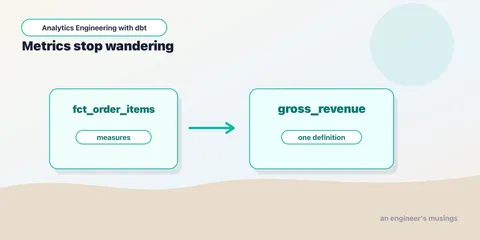
A practical orientation to dbt's semantic layer, MetricFlow, semantic models, entities, measures, dimensions, and when a team actually needs them.