N Systems, One Conversation: What MuleSoft Actually Is
Before the components and the DataWeave, the problem MuleSoft solves — and how Anypoint Platform, the Mule runtime, and Studio each fit into it.
Integration for newcomers — what MuleSoft is, your first Mule app, DataWeave, connectors, and a deploy to the cloud.
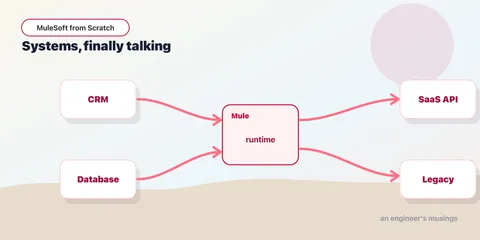
Before the components and the DataWeave, the problem MuleSoft solves — and how Anypoint Platform, the Mule runtime, and Studio each fit into it.
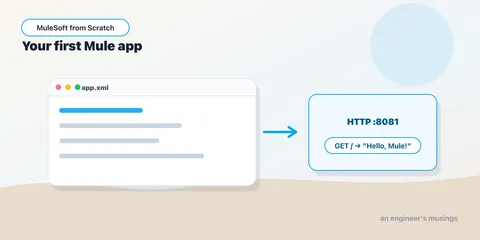
Sign up for Anypoint, install Studio, and build the canonical first Mule app — an HTTP listener that answers on :8081, run it locally, and hit it with curl.
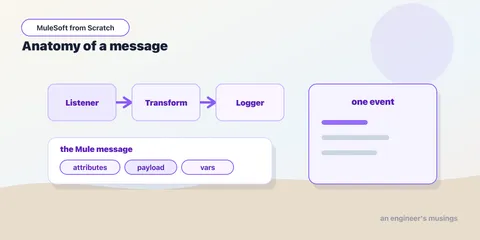
The Mule event, message, payload, attributes, and vars — the data model every flow rides on, and the #[...] expressions you use to reach into it.
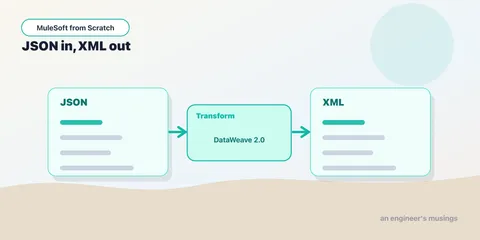
Meet DataWeave 2.0 — the transformation language that is the actual skill in MuleSoft. Selectors, map, building objects, and turning JSON into XML.
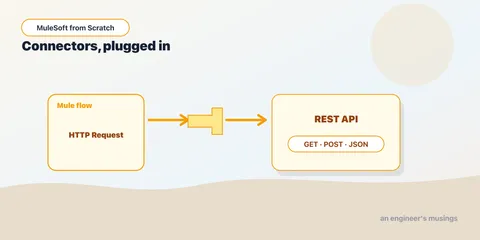
What a connector actually is, and how to use the HTTP Request connector to call a downstream REST API and reshape its response into your own.
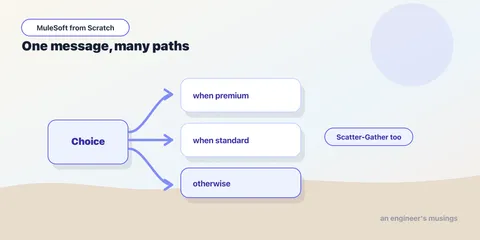
Choice, Scatter-Gather, and For Each — how a Mule flow branches on a condition, fans out in parallel, and walks a collection one element at a time.
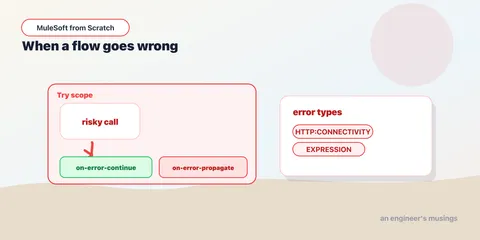
Mule's error model — error types, the Try scope, and why On Error Continue and On Error Propagate are the two words that decide who sees the failure.
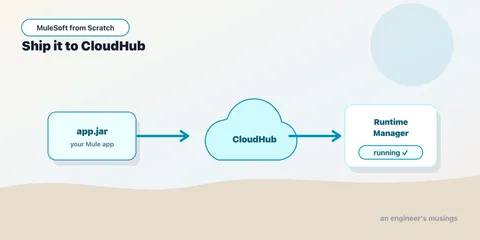
Package a Mule app into a deployable jar, push it to CloudHub, and stop hardcoding config — the leap from 'runs in Studio' to 'has a URL other systems can call.'

Test Mule flows the way you'd test any code — arrange, act, assert — and mock the network so your suite runs offline. Plus where the beginner series ends and the real work begins.