Stop Building Bridges, Start Building Layers
API-led connectivity is the architecture MuleSoft keeps evangelizing. Here's what System, Process, and Experience APIs actually buy you — and why the layering is the point.
API-led connectivity, advanced DataWeave, batch, policies, security, and CI/CD — MuleSoft beyond the basics.
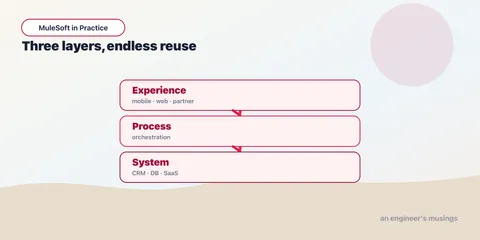
API-led connectivity is the architecture MuleSoft keeps evangelizing. Here's what System, Process, and Experience APIs actually buy you — and why the layering is the point.
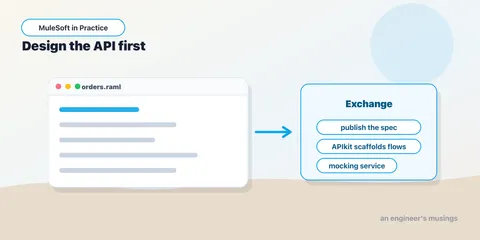
Design-first APIs with RAML: a spec you can mock and share before any code exists, then scaffold straight into Mule flows with APIkit.
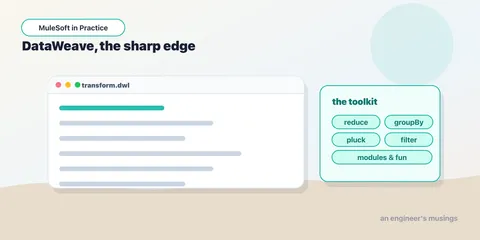
Beyond map and Transform Message: functions, reduce, groupBy, and a real flatten-group-sum transform that turns nested orders into a category revenue report.
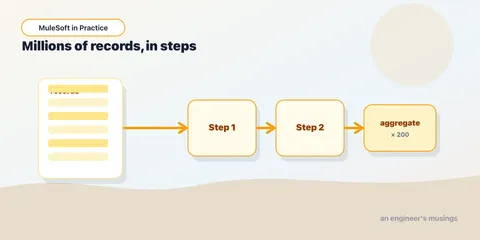
How Mule's Batch Job splits a huge dataset into records, processes them in parallel steps, and commits to a target in bulk — without loading everything into memory.
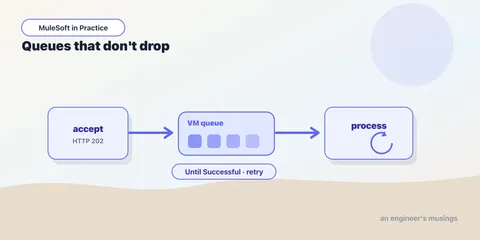
VM queues, the Async scope, Until Successful, and reconnection strategies — the Mule building blocks that let you accept work fast and finish it reliably, even when a downstream is having a bad day.
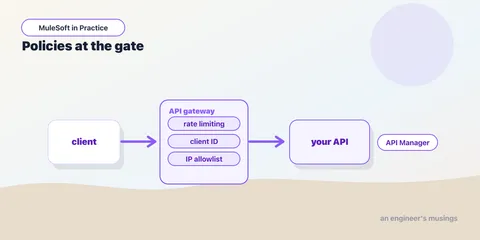
API Manager and runtime policies — rate limiting, client ID enforcement, spike control, and autodiscovery — so you govern who calls your API and how often, without touching a line of app code.
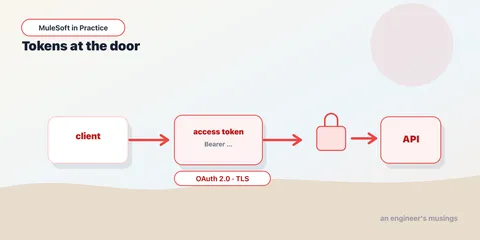
OAuth 2.0 enforcement, TLS, and secure properties — the layers that decide who gets through the gateway and who gets a 401.
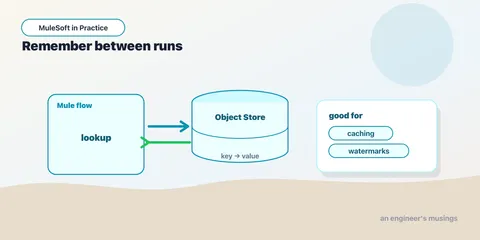
How a Mule app remembers things between runs — Object Store v2, the Cache scope, and watermarking for incremental sync.
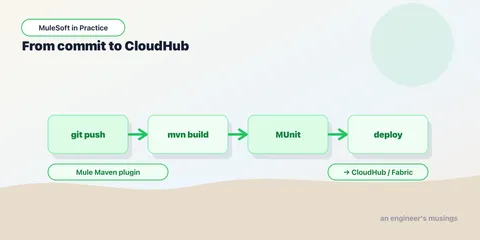
The Mule Maven plugin, MUnit gates, and a real CI pipeline — how to ship Mule apps like software instead of clicking Deploy and hoping.