Following One Order
A gradual route through Mule flows, a working order API, recovery and Anypoint Platform.
Learn Mule one step at a time: a greeting, the event, small transformations and tests, then a complete order API, recovery and platform operations. Thirty focused chapters and four optional appendices connect named examples to runnable companion checkpoints.
Download as an EPUB 35 chapters — read offline on any e-reader
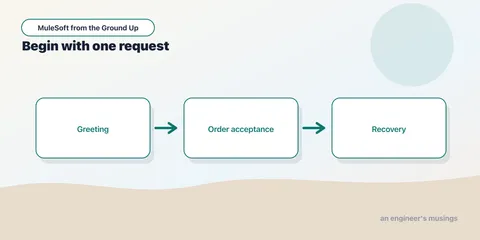
A gradual route through Mule flows, a working order API, recovery and Anypoint Platform.
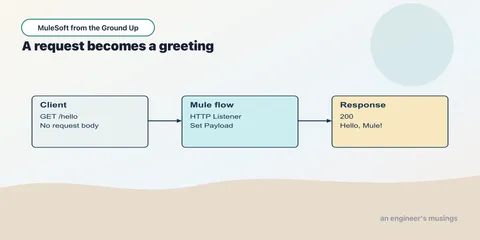
Run a complete first Mule application, change its greeting and diagnose the first connection or deployment failure.
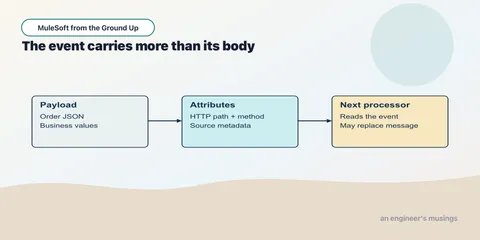
Inspect payload and HTTP attributes, follow a selector and trace a payload replacement.
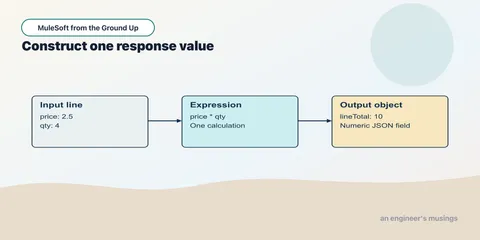
Construct a JSON object, follow nested selectors and calculate a single line before working with arrays.
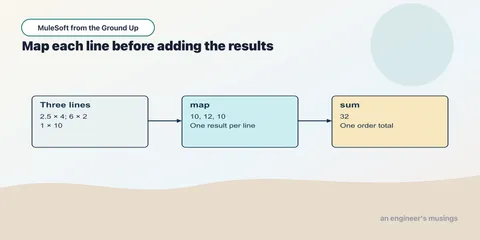
Introduce arrays and callbacks through line totals, then calculate a complete order summary.
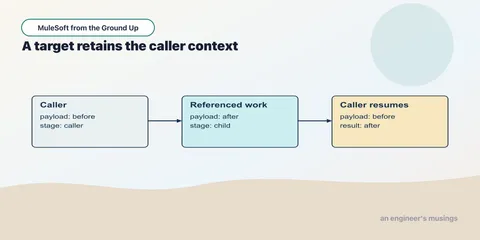
Retain event context, extract a subflow and compare ordinary and targeted Flow Reference calls.
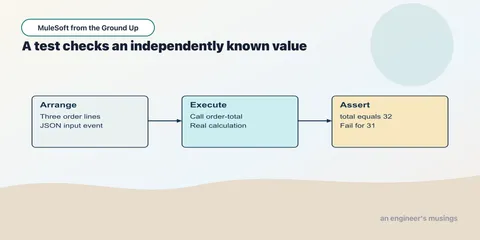
Write complete MUnit tests for a greeting and an order calculation before introducing dependency mocks.
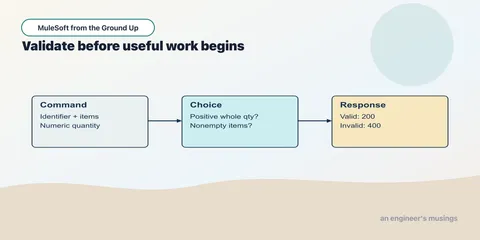
Define a small HTTP contract, teach Boolean predicates and Choice, and reject invalid quantities before side effects.
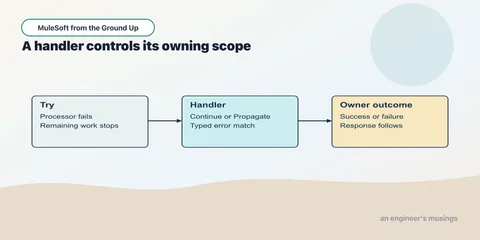
Raise typed errors, share a public handler and trace Continue and Propagate through their owning scopes.
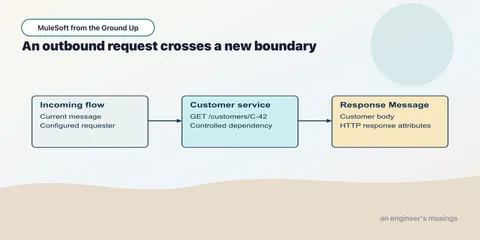
Load connection properties, start a supplied customer service and inspect an HTTP Request result.
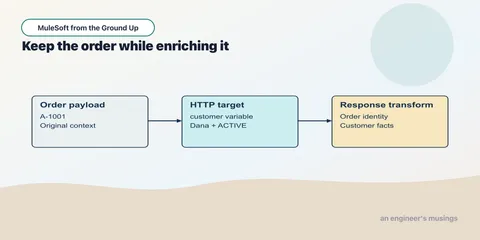
Use HTTP targets, explicit optional fallbacks and target-aware MUnit mocks to preserve an order during enrichment.
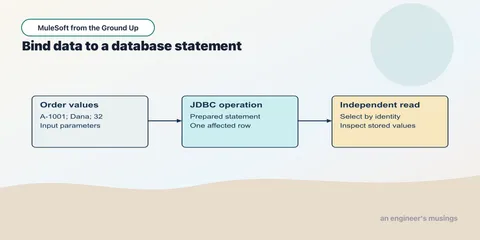
Configure JDBC, bind SQL parameters, inspect insert results and query independently stored state.
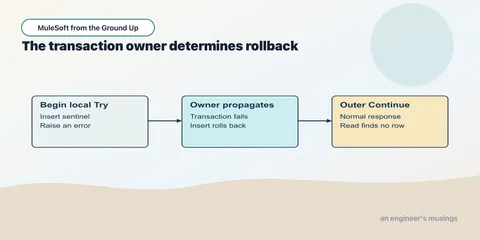
Observe rollback and commit with independent queries, then distinguish database participation from external side effects.
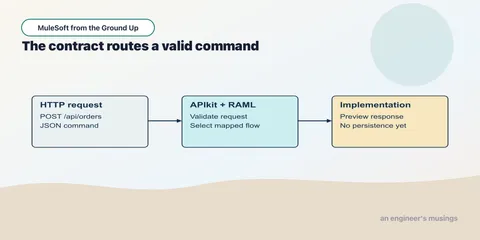
Describe a small order command with RAML, map it through APIkit and test malformed requests before persistence.
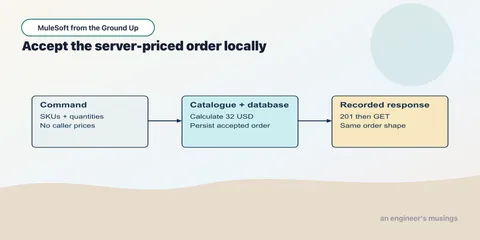
Assemble validation, catalogue pricing, persistence and retrieval into the first complete local order API.
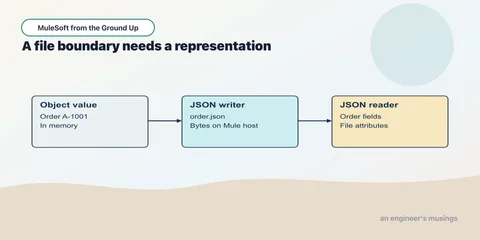
Serialize deliberately, locate the filesystem boundary and normalize a small CSV input before processing it.
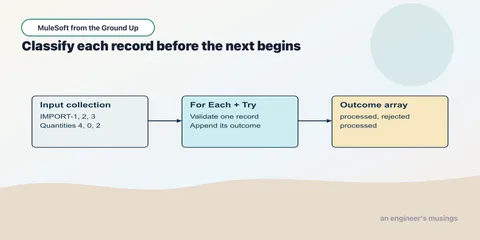
Trace For Each, record per-item outcomes and trigger the same bounded work with a Scheduler.
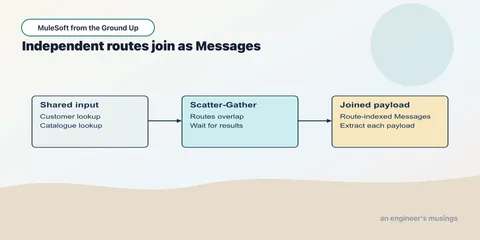
Read Scatter-Gather and Parallel For Each results, handle composite failure and account for dependency capacity.
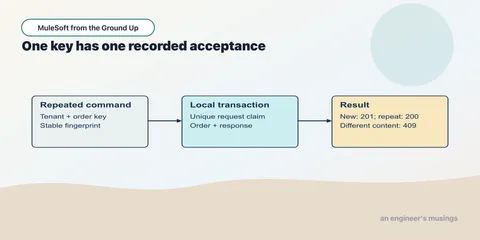
Separate retry from business identity and implement concurrent, transactional command acceptance with recorded results.
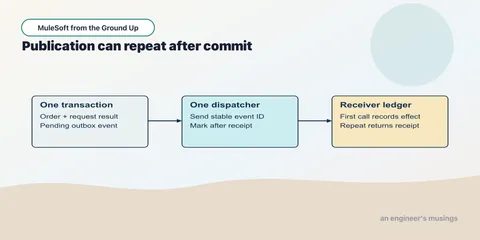
Implement an outbox and one-owner dispatcher, then recover from a receiver commit followed by a lost acknowledgement.
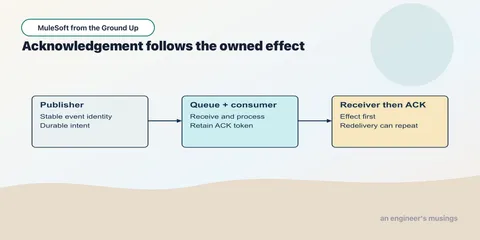
Compare Async, a transient VM queue and an account-dependent MQ consumer with explicit acknowledgement ownership.
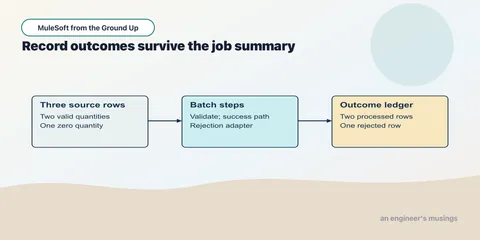
Run a bounded Batch Job with implemented success and rejection adapters, then reason about bulk outcomes and replay.
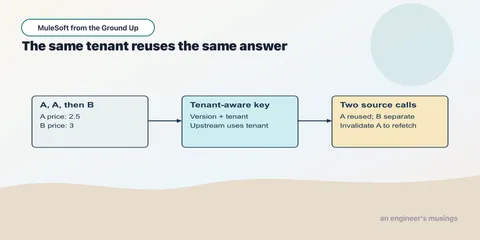
Verify tenant-specific cache reuse and invalidation, then distinguish disposable state from business ledgers.
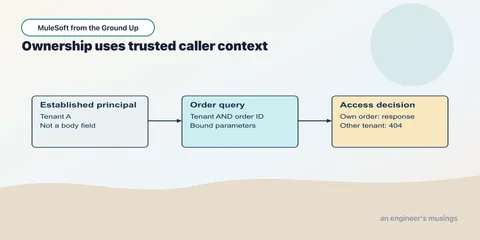
Separate trusted caller identity, tenant ownership, server TLS and secret delivery, with explicit local and platform boundaries.
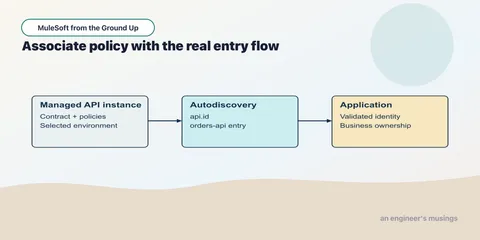
Associate API Manager with the real entry flow and test identity, quotas, resource selection and policy changes.
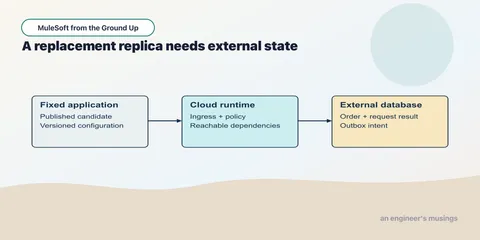
Prepare external persistence, trusted caller context and complete configuration before promoting an orders candidate.
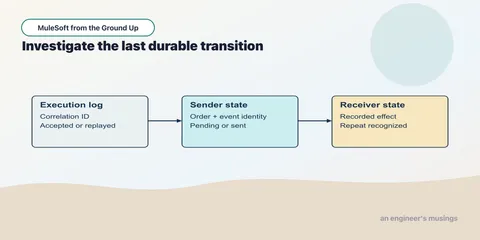
Connect honest transition logs with durable order, outbox and receiver state, then define useful operational measures.
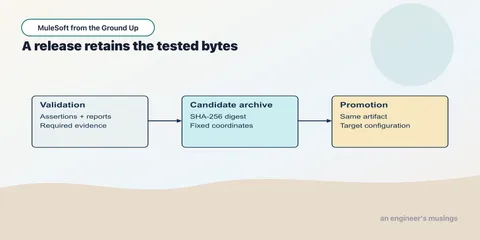
Run a concrete validation workflow, require useful reports and retain an artifact identity through promotion and rollback.
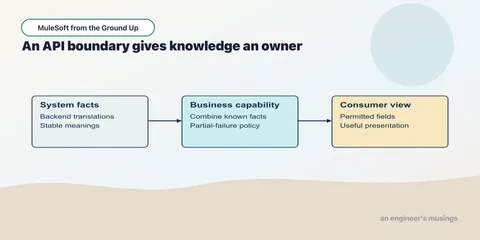
Use the completed service to reason about ownership, System/Process/Experience responsibilities and the cost of another call.
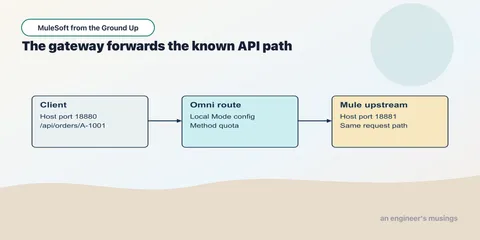
Follow one Local Mode Omni route to the existing API and distinguish configuration ownership, policy behavior and upstream failure.
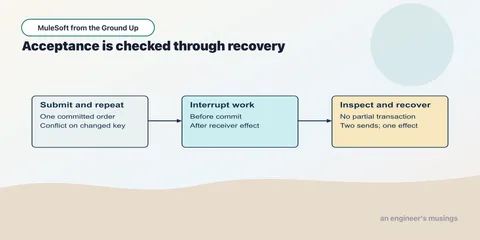
Run the assembled order service through repeats, races, rollback, ownership and interrupted publication without introducing new mechanisms.
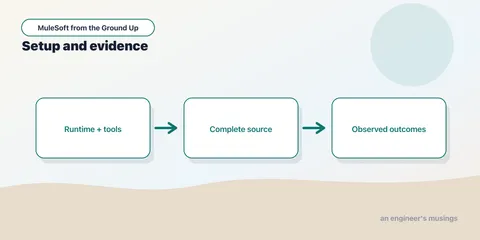
Reproduce the local checkpoints, understand the build workaround and distinguish new runs from historical and account-dependent evidence.
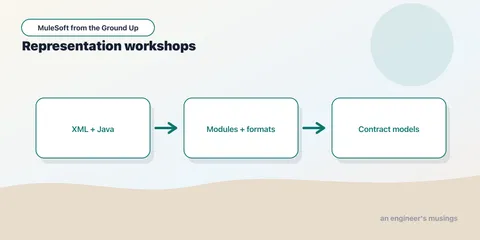
Extend known boundaries with complete XML/module/message workshops and clearly separated historical runtime-format probes.
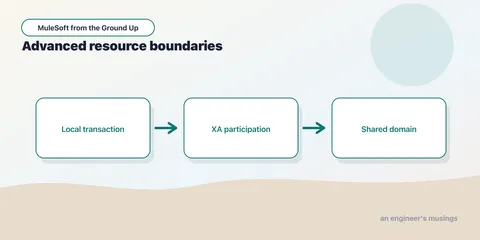
Preserve the participation, recovery and shared-resource distinctions without expanding the local transaction promise.
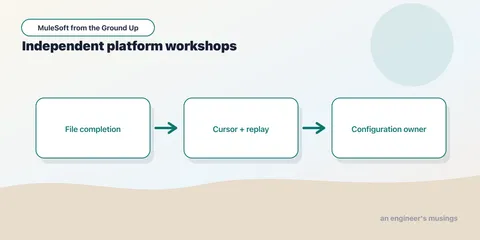
Keep SFTP completion, ordered watermarks, token refresh, managed state and Connected Mode governance as independent workshops.